
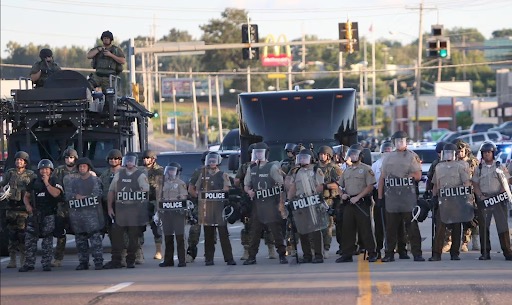
Tanks and police line up in response to the uprising in Ferguson following the murder of Michael Brown, The Guardian August 14, 2014
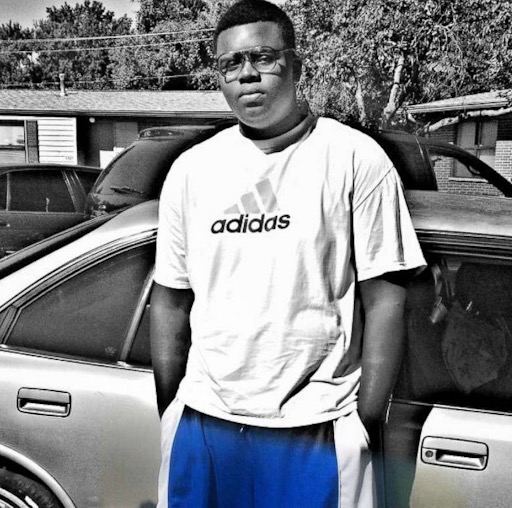
Ten years ago Michael Brown and his friend were strolling on a street when a police officer, Darren Wilson, rolled up to them shouting to move onto the sidewalk. Michael Brown did not respond to the intimidation. I think this is what got him killed. He was not disrespectful. He feared for his life. His body was then left on the hot summer asphalt for four hours, conjuring images of the centuries-long era of extrajudicial lynchings of Black Americans.
This act was traumatic for Black Americans, who live with the question hanging over them that asks: “Am I next?” The uprising was a response to the fear of living with this question that follows people and moments like a shadow. Yet, instead of recognizing this as an opportunity to help a community and a country heal, politicians and law enforcement did what they do and sought to punish the people in the streets. Yes, there was real violence committed by opportunists, people stole, one person shot two police officers as a personal vendetta. The tanks and police in riot gear helped destabilize the situation by their presence. They reinforce the haunting question with the affective nature of their uniforms, shields, batons, guns, and tanks. None of these instruments call for peace and show support for those who hurt in the wake of this horrible tragedy. We lie to ourselves and others when we don’t challenge these narratives.
When I saw the newspaper photographs, the glaring truth on view was people were reacting to racism as an historical trauma. People of Color are forced to live in this in-between space of life and death due to the very nature of police and our justice system that continues to prioritize white interests. These weren’t “riots”, though there are always the idiots that will use these moments as opportunities to destroy the systems of oppression. Understood, but let’s go about it with more focused passion. Understanding racism as a trauma was language I understood and knew how to talk through with more comfort than most. Trauma runs through cycles, rearing itself every few years, or maybe even decades. The cycles have to be broken with love as the greatest force working in opposition. Protesting these systems and choosing to break cycles are the greatest acts of love for the self and for other that can be expressed. This is a big reason people who want change talk illuminate the past. The past shows us how we can address the present in order to write liberated futures. If we continue to allow governmental violence control the streets, we are writing a future that will depend on violence as a means to control. But if we choose to use these moments to gather and grieve and speak from the heart, barriers can be broken.
I’m reading a book right now called Radical Dharma: Talking Race, Love, and Liberation by Rev. angel Kyodod williams, Lama Rod Owens (he’s awesome and has a meditation series), with Jasmine Syedullah, PhD
Other books that teach love as a means to overcome oppressive systems:
Teaching to Transgress: Education as the Practice of Freedom by bell hooks
Why We Can’t Wait by Dr. Martin Luther King, Jr.
Freedom Dreams: The Black Radical Imagination by Robin D. G. Kelley
Resources
https://rfkhumanrights.org/litigation/michael-brown-case-urges-justice-reform/