
Poet Tonya Ingram at the opening of Exploring Human Injustices through Art
The 2024-2025 Goal of Time & Memory Project
(As I finish my dissertation)
The Time & Memory project uses art as a tool to navigate through the walls built by racism towards personal and collective agency with the hope that we will write futures filled with possibility. The Project does this by making connections between the past and present and creating space for processing the difficult emotions art can stir. Currently, I am developing my own arts practice through an exploration of materials and process, For my practice, I am finding a home among plants and clay, two things that literally ground the body and connect me to the Earth as Mother and Provider. These lessons have helped my body heal after an accident in 2020 that required several major surgeries that made mobility and writing difficult through the physical pain. Slowing down time and connecting with lands that hold great memories and learning that I am my greatest resource have been shaping my present.
Since time moves in parallel and overlapping form as well as chronologically, much has been going on outside of my personal need to heal and get back to work. Trump is again the presidential nominee. The Supreme Court granted him immunity from most of his actions on January 6, 2021, and then someone tried to kill him during a rally. Police are still killing unarmed Black people, many of whom had mental issues and needed support that was, instead, met with violence. Without healing the wounds of racism, these cycles will not stop. We can look back in time and mine historical memories. When we ask pointed questions of the past, we are actually considering ways to design the future. Arts-informed practices, such as discourse, inquiry, activities and games, art making, and curating help slow down time so that we may see the past, present, and future more clearly and truthfully.
About Katie
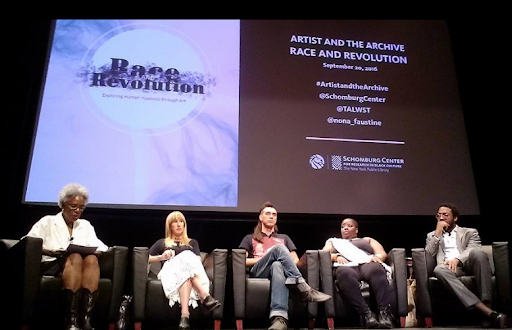
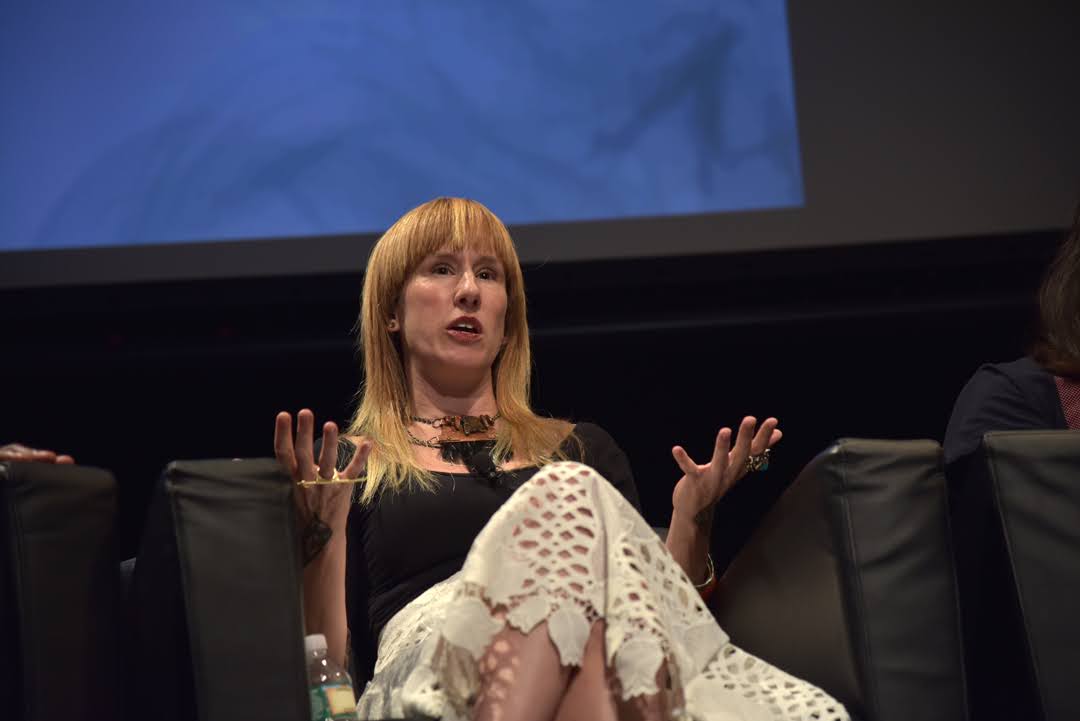
Speaking as part of a panel for the Artist & Archive series at the Schomburg Center for Research in Black Culture, September 2016
This video marks the genesis of my ideas and inspirations that would become Race and Revolution. Walking through the gallery of Exploring Human Injustices through Art, installed on Governors Island in the summer of 2016, I talk about how the past bleeds into the present because we are stuck in trauma cycles. Contemporary art helps us see what these cycles look like through the lens of those who live it. My hope is that by creating a space where the art can live and share its perspectives and based on the visceral responses bodies have towards art, discourse might be more open.
What is Meant By Time & Memory?
An Evolution of Thought
The French philosopher Paul Ricoeur (2004) wrote about historical memory as nation-making ideology, stating, “imposed memory is armed with a history that is itself ‘authorized,’ the official history, the history publicly learned and celebrated. . . A formidable pact is concluded in this way between remembrance, memorization, and commemoration” (p. 85).
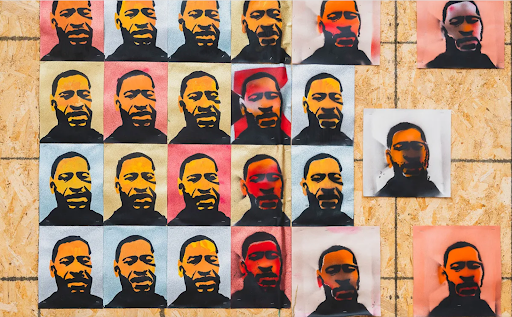
In March of 2020 I was in my second semester of graduate school, working towards a PhD. We recall the pandemic hitting in March, but what most would not yet know is that a young woman was gunned down by police in her apartment. This woman, Breonna Taylor, was asleep when police barged into the wrong apartment to serve a no-knock warrant. Her boyfriend, who had a legally licensed gun, fired back. The police, fired a reckless flurry of bullets, killing Ms. Taylor. Before her killing made national news, we learned of a young Black man, who had been running near a Georgia suburban neighborhood. Ahmaud Arbery was followed and then gunned down by three white supremacists for being in the white neighborhood at the wrong time. This is the text-book definition of a racially motivated lynching. The third killing became the chokehold that broke open a global protest to end police violence, racism, and colonialism, all practices realized with the advent of African slavery in Europe and then the Americas. A police officer named Derek Chauvin put his knee on the neck of a Black man named George Floyd. The chokehold lasted over 9 minutes. Nine minutes changed the world. At least that nine minutes changed me.
What happened to these three, young, Black citizens is an expression of racism as an historical trauma. The police and the three citizen killers acted with impunity, as have so many violent racists before them. The police have always been hunters of Black bodies, from their inception as slave patrols in the eighteenth century, to mob rule, to the police acting as judge, jury, and executioner. When I started working with art independent from an institution, I wanted to expose racism’s trauma cycles and patterns, hoping [white] people might gain some awareness of their privileges in order to do better. The history learned in school is monovocal, one voice tells one perspective. Knowing this, I wonder how history will remember the spring of 2020. History is narrative; it is feeling, and connective, and for these reasons it teaches us new ways of being.
The protests in the wake of these three murders were rallying cries for the world to reflect on how they relate to race and racism. In the 4 years since these three significant murders, Democracy’s facade has begun to crumble, but there are new ways of being we have not even imagined, yet, but artists are already designing new paths. Being engaged with art helps us see ourselves in new ways, but we have to be willing to see. Art awakens the body, connecting us to our feelings and lived experiences contained in our cellular memory. For this reason, art is an expression of our interior selves, identities and characteristics hidden in the sinew, blood, and derma. When we activate these secret parts of ourselves, we find agency and the strength needed to fight for inclusive histories, arts, curriculum, public spaces, and institutions.
When history is imposed upon us, when it is rewritten, we must go back in time to seek the truth. As I was writing this, an assassination attempt was made on Trump during a rally in Pennsylvania. The violence that pockmarks public events is evidence of forgetting, of national history telling us victory is found on the battleground through bloodshed and accumulation of casualties. The past teaches us of the tremendous toll this path is having on the present. We can disrupt the present to write a future free from the hold Capitalism, the Second Amendment, and the lust for power have on this nation. Art helps us imagine such futures.