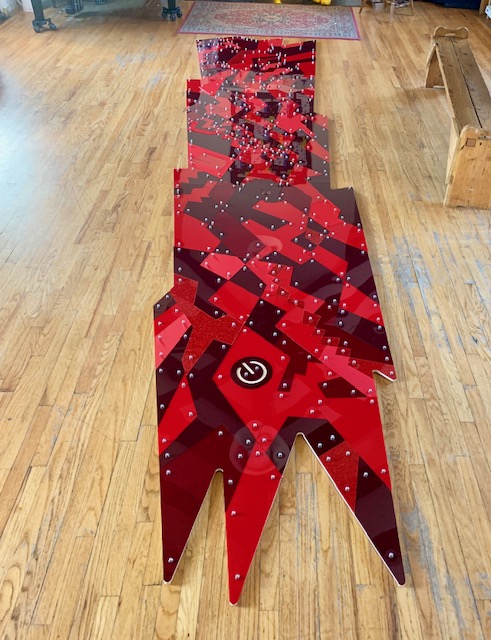
It Was All A Dream (2019) takes its title from a lyric by the late rapper Biggie Smalls, harkening back to the artist’s childhood in the 90s—the decade in which Biggie lived and died in the public view. Made of interlocking milled wooden “plates” that take the shape of a nebulous puddle, at once evoking a blood splatter, a reflecting pool, and a portal or hole. The mystery of Biggie Smalls’ heavily publicized death is now firmly fixed into the collective consciousness as inseparable from both New York City and the violence that surrounded both his and the late Tupac Shakur’s careers. Likening their rivalry to other historic black men lost to gun violence (Martin Luther King Jr, Malcolm X, etc.) and the often-tenuous relationships between black peoples, police, and gun violence, this work hopes to interrogate the narratives traditionally placed on black male bodies.