Reimagining Monuments

March 20, 2019

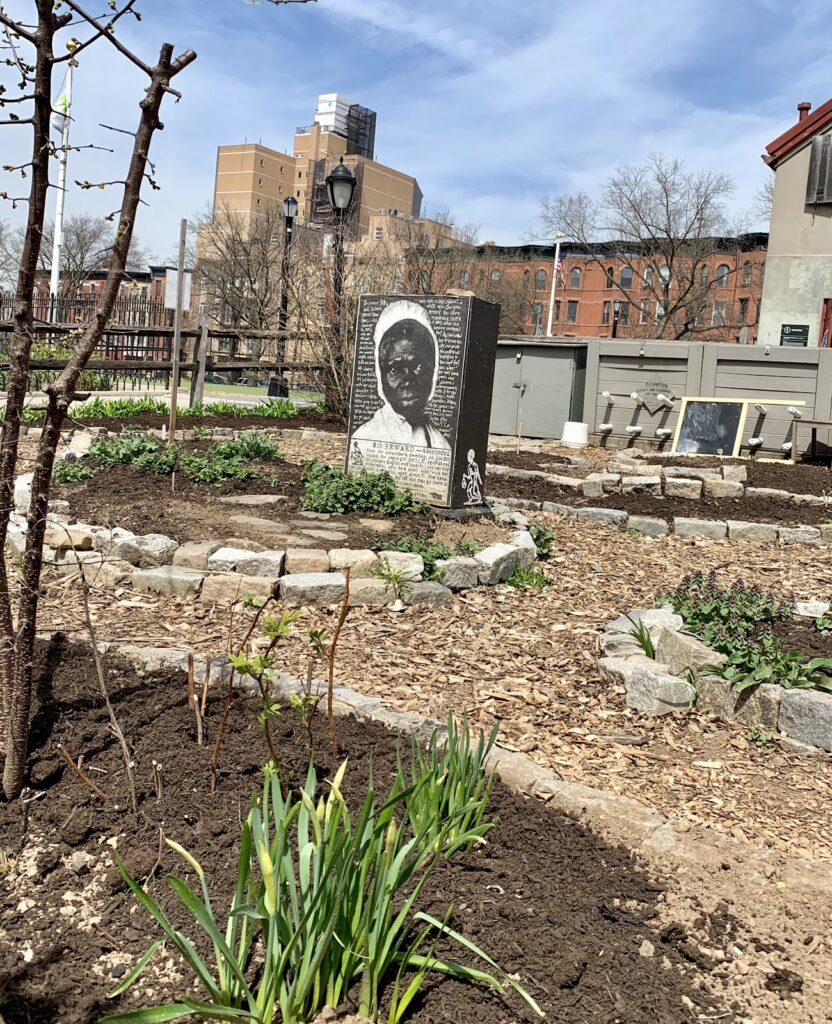
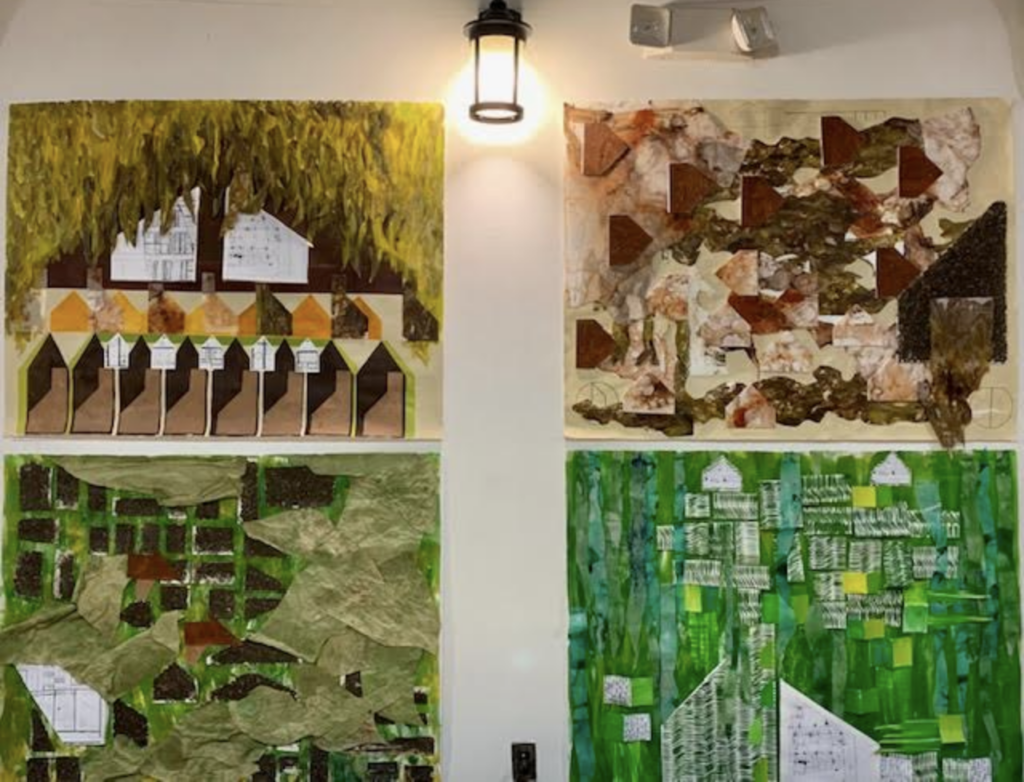
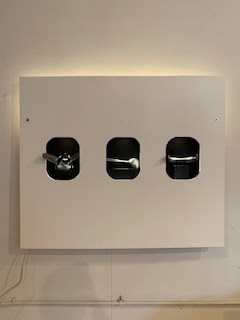
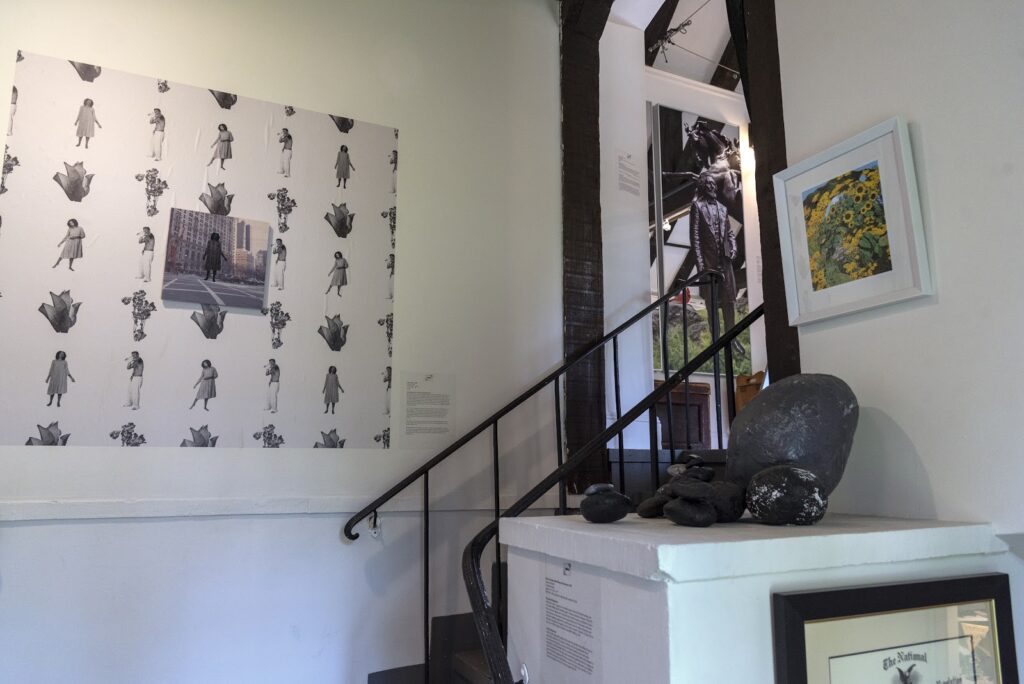
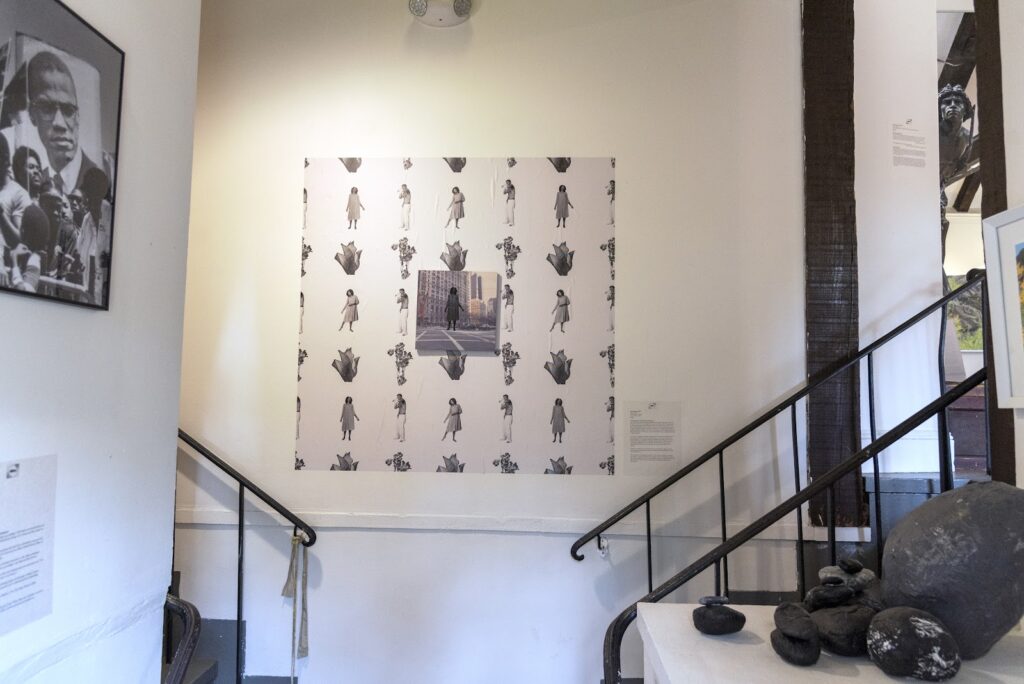
Reimagining Monuments questioned the relationship between historical memory and historical monuments and the implications for histories that remain absent. Sixteen artists responded to existing New York monuments or to sites they felt should have a monument. Placed alongside the artists’ work, quotations from historical documents about the corresponding monuments or sites opened up dialogue regarding a need to re-examine these physical, selective sound bites of memory.

Through drawings, quilts, interactive sculptural pieces, public art and paintings the sixteen artists created inclusive, dimensional histories. Their works address the often debated controversies around such figures as Christopher Columbus, George Washington and J. Marion Sims, and also offer insight into how collective thinking has shaped New York’s story, confronting not only what we remember and memorialize, but how.

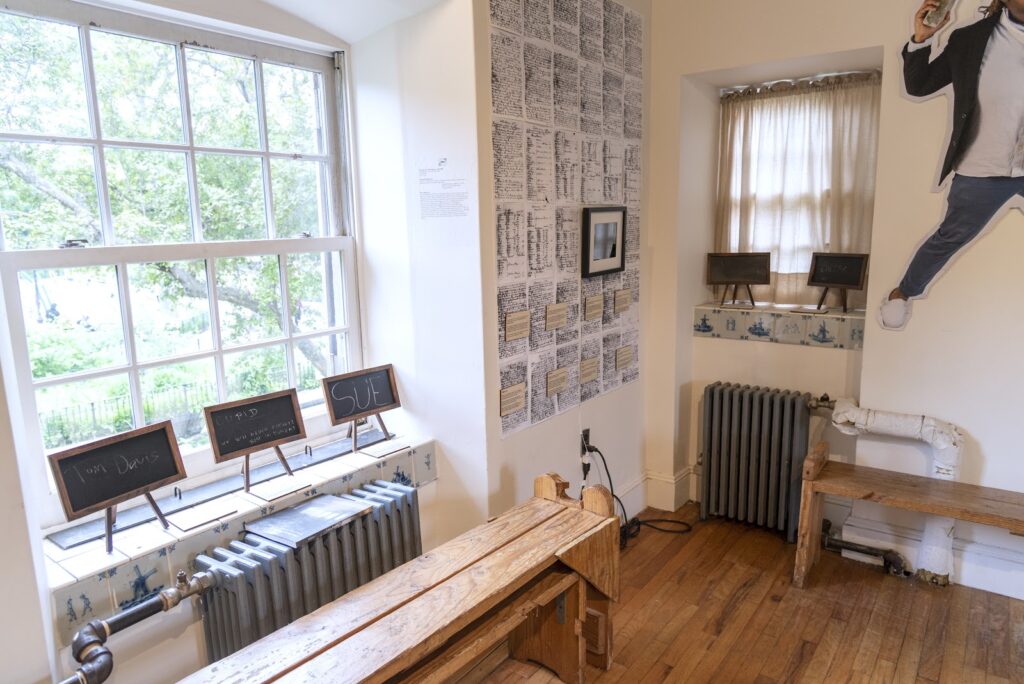
The exhibition was hosted by the Old Stone House of Brooklyn, itself a historic site. Built in 1699 as a Dutch homestead, the Old Stone House was a pivotal site during the Battle of Brooklyn in 1776, and it was the first home of the Brooklyn Dodgers. In the 1930s Robert Moses reconstructed the house using the original stones on the exterior. Today the house and its surrounding park is a gathering place for Brooklyn families, and it hosts weekly events and school groups.
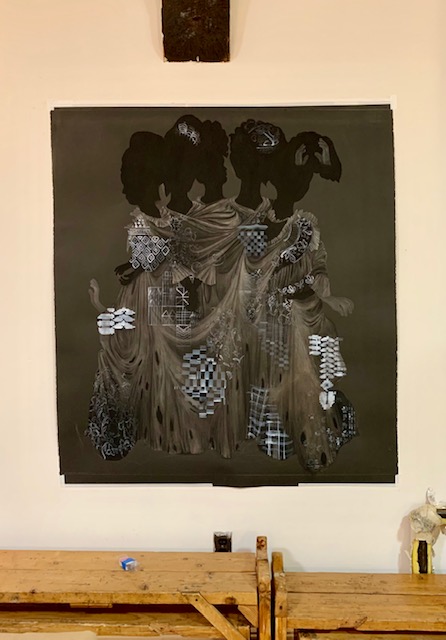

It Was All a Dream by Damien Davis; photo by Sina Basila

Erased pasts: Black Women as Drivers of Economy

Stories inevitably get lost to history, but when a pattern emerges that shows the lost histories belonging to Black, Brown, Indigenous, Asian, Queer peoples, we must take it upon ourselves to search for what we know to be true: Just because histories are not readily apparent, does not mean they never happened. History is written through access to primary source documents, and if people did not or could not write, it is less likely we will learn about them through the traditional historical archive. Oral history traditions, art, artifacts, and descendents provide a wealth and depth of information for the historical record. These artists expose hidden histories while also connecting with the narratives of past lived experiences.

The Way We’ll Care with You, Difficult Love, Midnight Dialogues c. 1649-present, 2019 by Alex Callender
“Tush, they can shift,” refers to plantation owners cutting rations to starve those enslaved, fo…

Institutions for Children

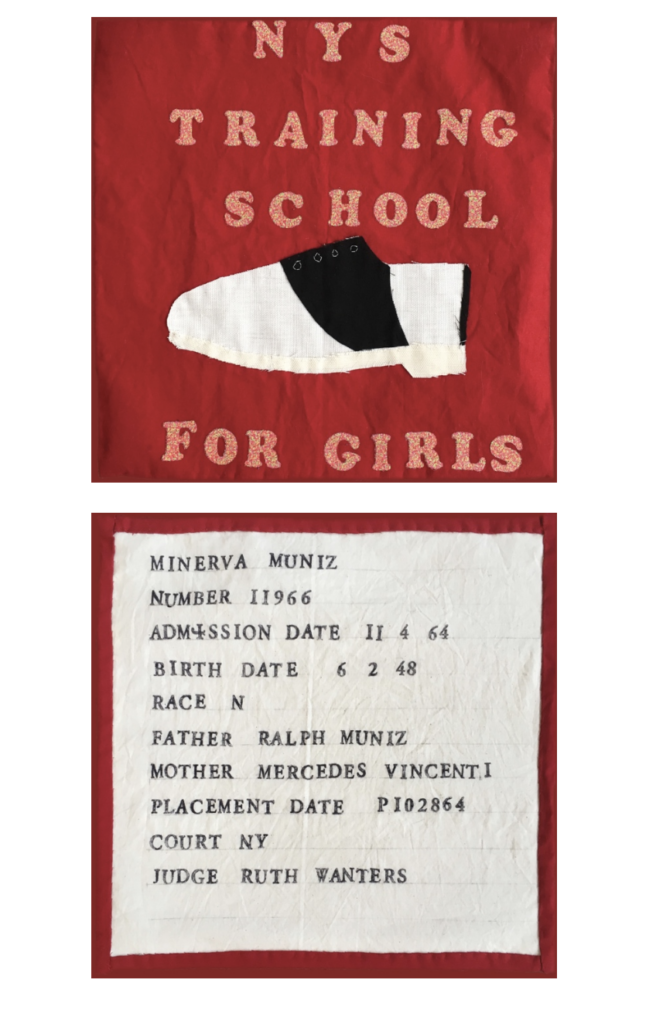
The Cloth Book by Maureen McNeil
This story of Luz Minerva Muniz’s solitary confinement at the New York State Training School for Gir…
Visual Memoir Dedicated to the New York Colored Asylum 1863 and After. . . by Jennifer Mack Watkins
These prints are a visual memoir of the life before and after the 1863 New York Draft Riots that bur…

Black Ingenuity

Black ingenuity is quite possibly its own skillset. In this context ingenuity leads to survival. Ingenuity is the mother of invention, correct? In the case of artworks pictured here, ingenuity was the complex network of people and places connected to the Underground Railroad. Brave scouts led enslaved people to freedom and returned to the South to liberate more. Christopher Wallace, AKA Notorious B.I.G. used ingenuity grounded in talent to change his life’s trajectory, from drug dealer to rap superstar. Ingenuity is not to be mistaken with meritocracy, an invented term that supports rugged individualism. Ingenuity is found in community, in talking with and learning from others. Rugged individualism and meritocracy both espouse the belief that if you work hard enough you can succeed at anything. While this is true for some, it does not take into account intergenerational wealth, social capital, and institutional trauma that happens at school, by police, in hospitals, at work, and in public parks, etc. Ingenuity looks within and accesses the gifts they already contain as a guidepost. Bravery, curiosity, and determination are all necessary, too. Ingenuity organizes these characteristics to make use of them.

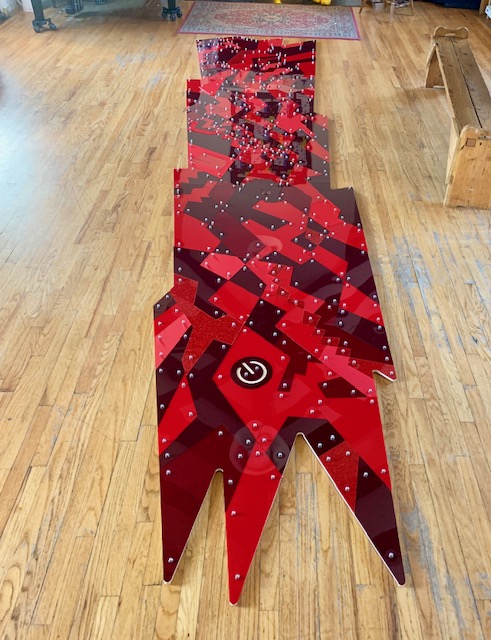
It Was All a Dream, 2019 by Damien Davis
It Was All A Dream (2019) takes its title from a lyric by the late rapper Biggie Smalls, harkening b…
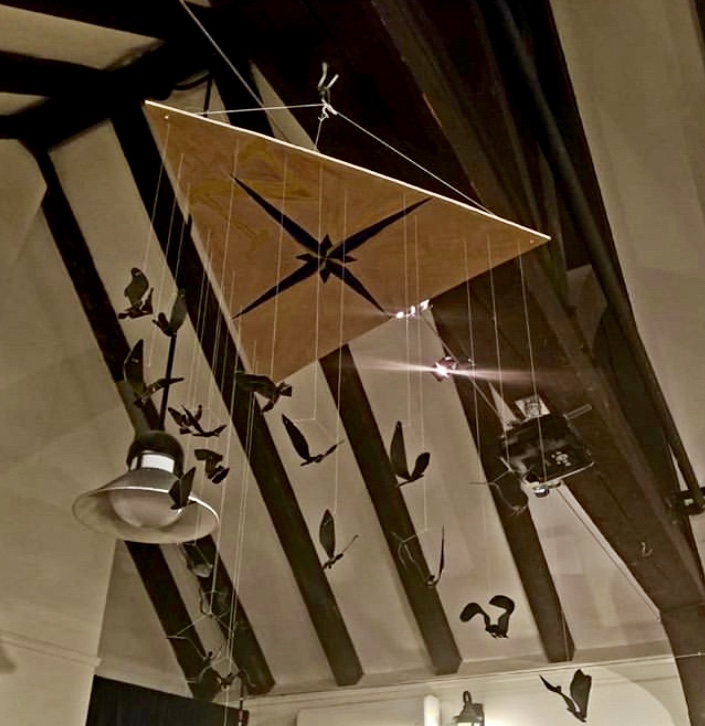
Flying North by Ayasha Guerin
Inspired by the relationship between those who fled southern plantations and the migrating birds the…
Soujourner’s Sojourn, 2019 by Chip Thomas (Jetsonorama)
This photographic mural uses a narrative/counter narrative format to challenge a prevailing paradigm…

Erased Pasts: Seneca Village/ Black excellence in history

Seneca, 2019 by Kimberly Becoat
Seneca Village represents the beginning of social equity for free Blacks in New York City. Black peo…

Carceral violence

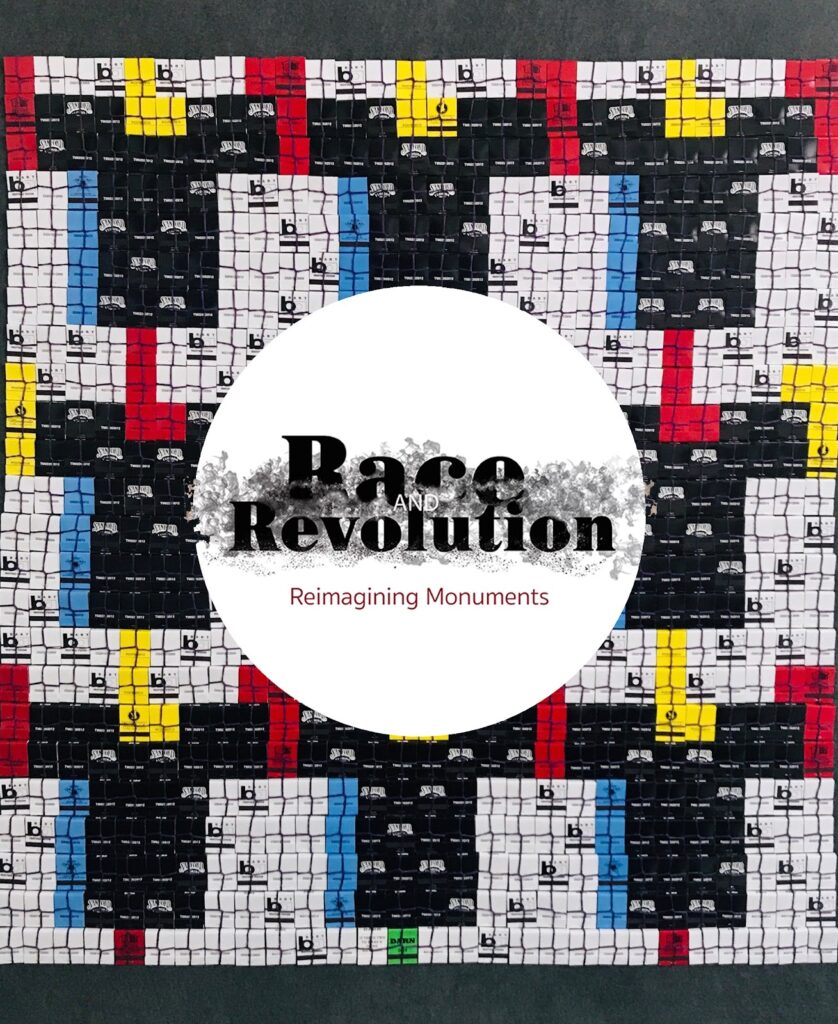
ROBES B/W, 2018 by DARN Studio
The “ROBES B/W” quilt pattern juxtaposes stylized robes alternating in either black or white tha…

Erased pasts/ Black Ingenuity

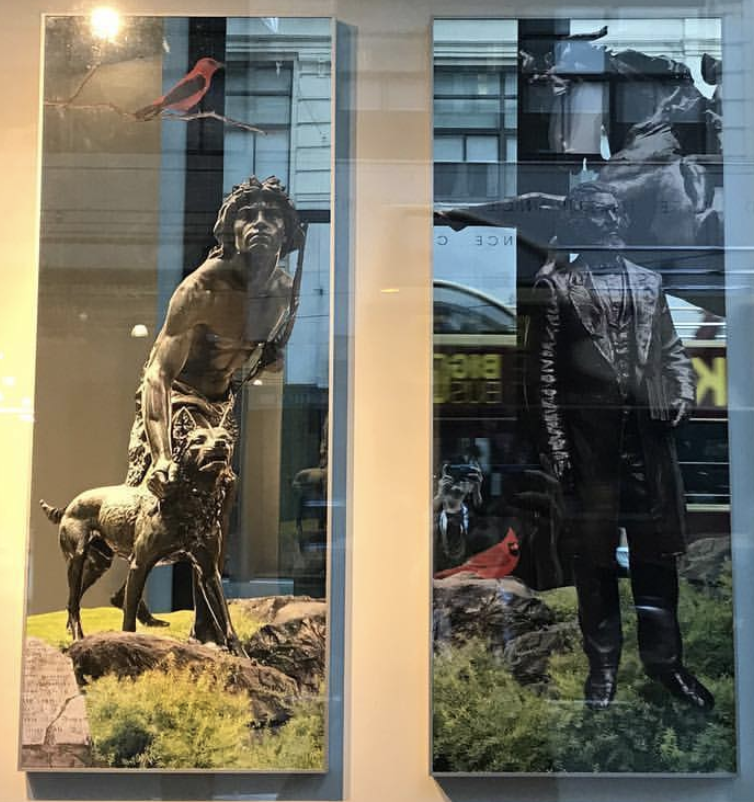
Monuments selection from "Empirical Data and other fabrications", 2018; "Between Monuments" - Triumphal Column Series, 2019 by Rose Desiano
Public monuments create a narrative, a nonlinear tale of our histories, that is often inaccurate and…

Erased pasts: Slavery

The Speculum Project, 2016 by Maureen O'Conner/ Inst. for Wishful Thinking
If gynecology is premised on such practices as Sims, might the entire specialty be reconsidered in t…

Erased pasts: Washington the enslaver

Materials from Washington’s Next!, 2018 by Lyra Monteiro
When President Trump tweeted out this “slippery slope” argument after Charlottesville, The Museu…

Erased pasts: Black New York history

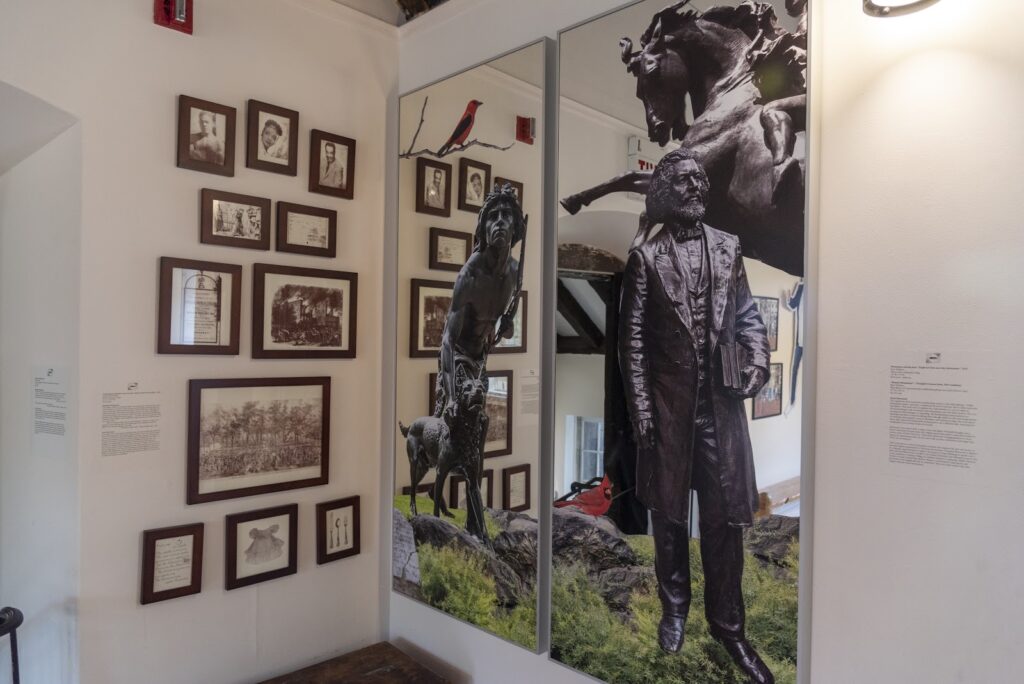
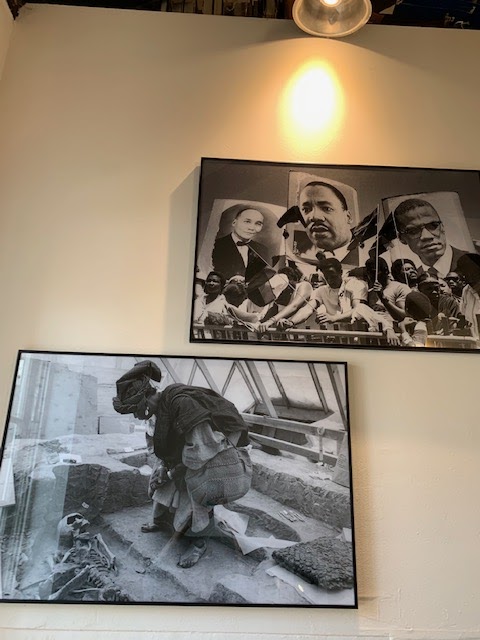
Three Placards, 1986; African Burial Ground, 1992 by Marilyn Nance
From about 1640 to 1795, historians say, perhaps 15,000 slaves were buried there in a forgotten wast…

Native New Yorkers

Water Protectors (Mni Winconi) Monument, 2019 by Emmaline Payette
In 2016 the Ramapough Lunaape Nation built the Split Rock Sweet Water Camp on tribal land in Mahwah,…

Erased pasts: New York Slave Revolts

Public Square, 2019 by Kamau Ware
In 1711, a law was passed to create a market for the selling and renting of enslaved African bodies …

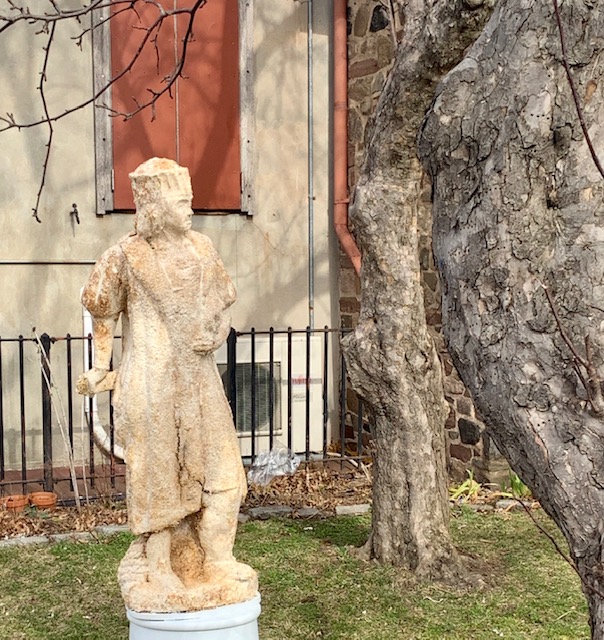
Erased colonial pasts/ Distorted historical narratives: Christopher Columbus

Christopher Columbus, 2019 by Zaq Landsberg
The Spanish Crown removed Christopher Columbus removed from power in the West Indies because of his …

Distorted historical narratives: Queer history

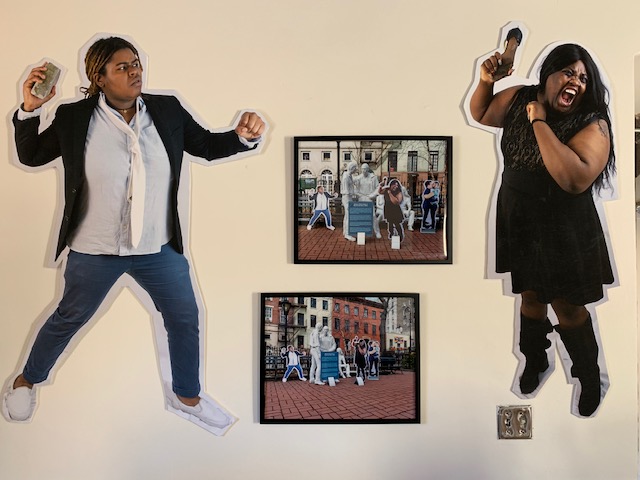
Queers Don’t Deny it, Stonewall was a Riot, 2019 by Sal Munoz
In the early morning hours of June 28th, 1969, police raided the Stonewall Inn, a gay bar in the Wes…
Time & Memory Project