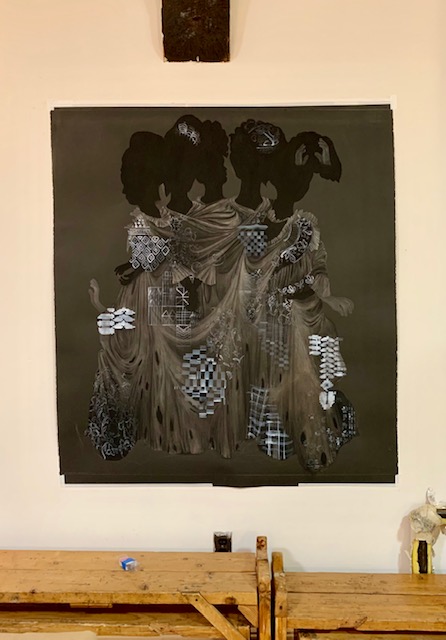
“Tush, they can shift,” refers to plantation owners cutting rations to starve those enslaved, forcing them to steal food from the white servant class. This planation policy, developed in the 1600s, was a way of destroying the joint rebellions and separating oppressed peoples based on constructed racial characteristics, creating racial biases and eradicating poor people’s solidarity. In decolonizing French’s statues, The Four Continents, I revisit these representations of women who adorned the US customs house (now the National Museum of the American Indian), not as bodies of economic speculation, but as the powerful Hydra. The Many-Headed Hydra was a colonial graphic envisioned by the European ruling class, which represented all the peoples that they would need to violently subdue to carry out their colonial economic project.