Home/Land

February 15, 2020

Home/Land paired true stories of those who escaped or attempted to escape slavery in the years surrounding the Fugitive Slave Act of 1793 with current experiences of family separation in the United States since this time, specifically how this phenomenon affected Latimer and his family.

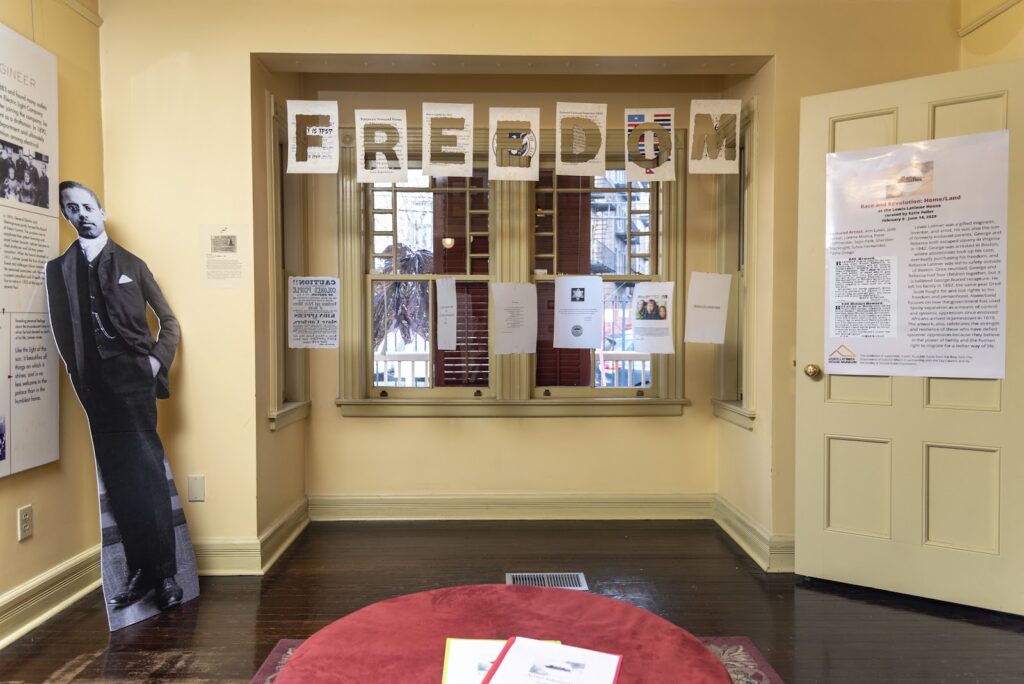
Eight to ten artists were given access to primary source documents from the past to create works that show a connection to it. Basing their art pieces on families’ migration journeys and their encounters with ICE brings the pain of the past into the present. But family separation has more hidden layers about which artwork can help create dialogue. Excerpts from historical runaway slave ads were posted on the wall next to the art piece. Displayed together, the documents and the artworks asked what, if anything, has changed regarding how this country treats humans labeled as “illegal”.

An additional element to this exhibition was that the art pieces were displayed amongst items in the Latimer historical home, Lewis Latimer’s inventions and accomplishments, as well as his artwork and poetry, further grounding the past in the present
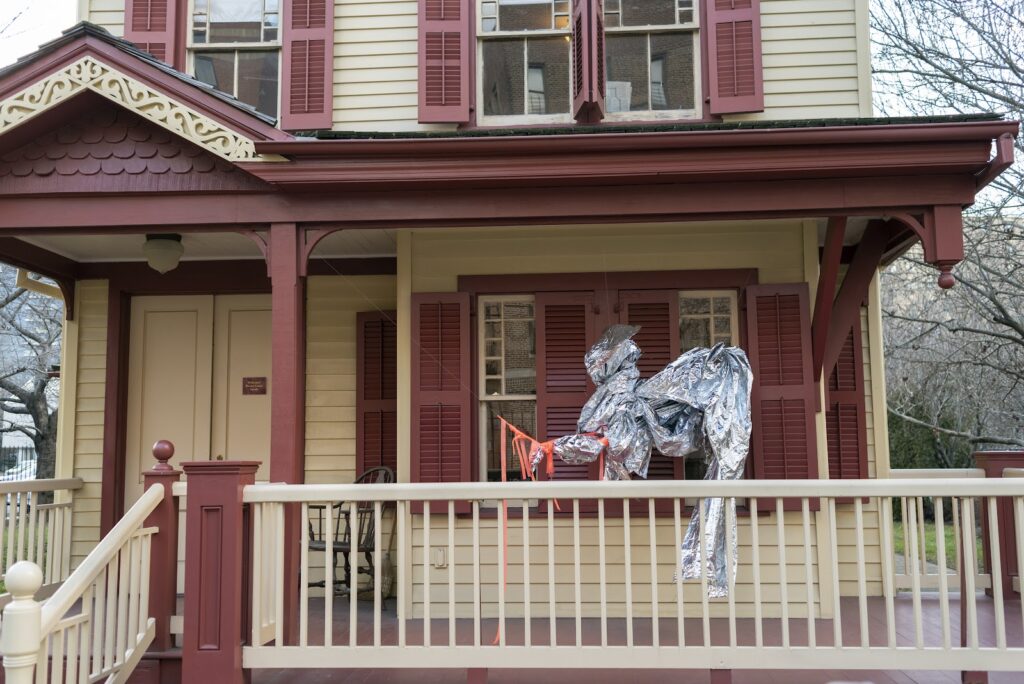

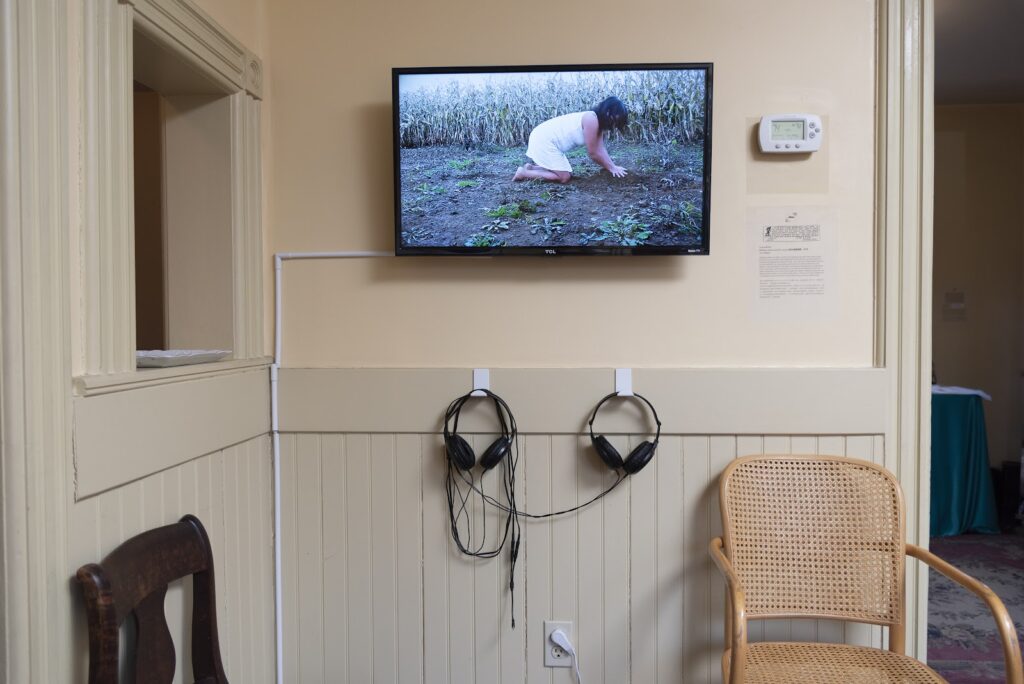
Over Our Heads by Tasha Dougé from Home/Land at the Lewis Latimer House Museum, 2020

Immigration

The United States’s militant border control policies were founded using tactics bounty hunters and law enforcement used to hunt and capture enslaved people running to freedom. These tactics traveled through time as a means of oppression.

J.I. v. United States; From Us to Us, by Ann Lewis
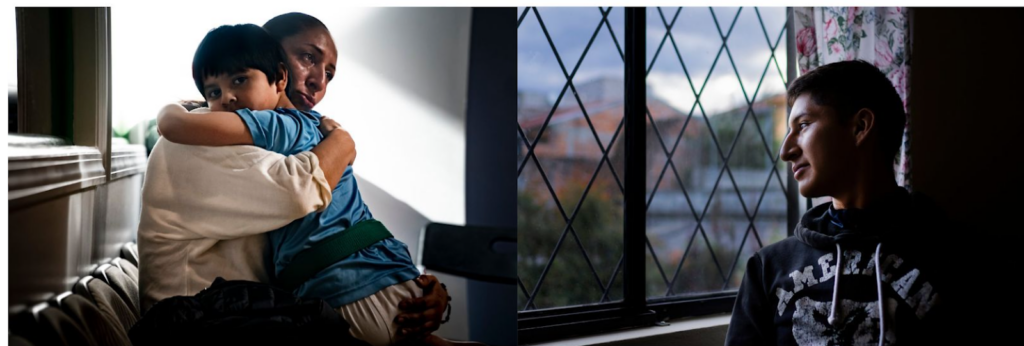
Seeking a home free from violence, oppression, and fear has been the struggle of millions of people …
Beyond the Divide by Jade Sacker
Zoila, an immigrant from Ecuador, has not seen her son in fifteen years. In her mind, she still imag…
Building a Home out of Dirt, 2018 by Lorena Molina
Building a Home out of Dirt is part of the Nothing Hurts like Home Series, which explores my complic…
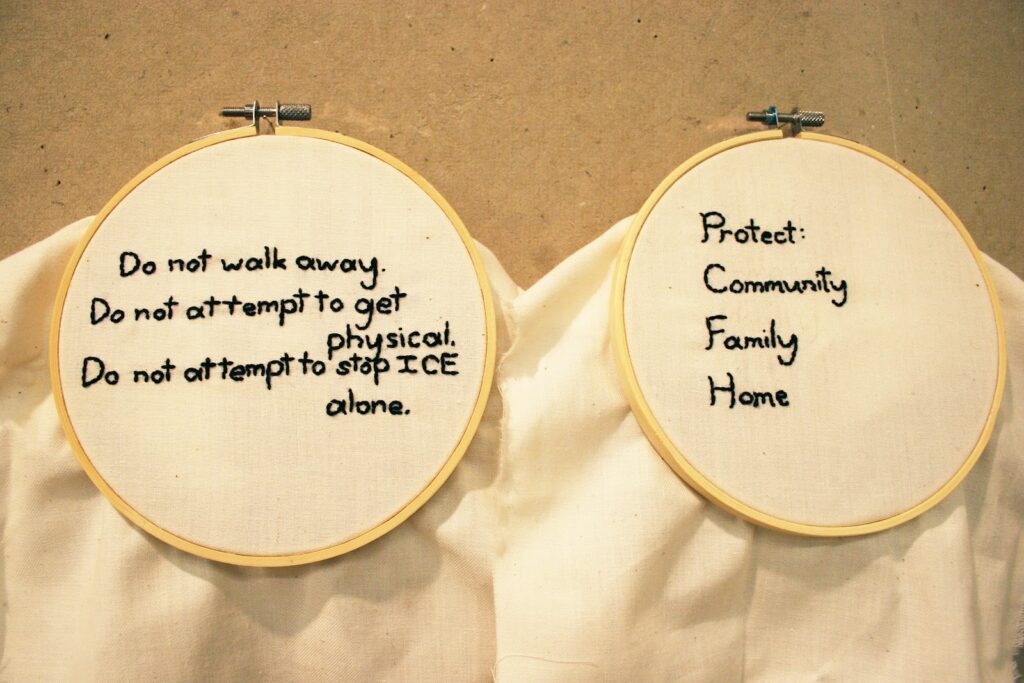
Comforts of Home, 2019 by Sejin Park
In the face of ICE targeting the immigrant community, Comforts of Home uses embroidery as its medium…
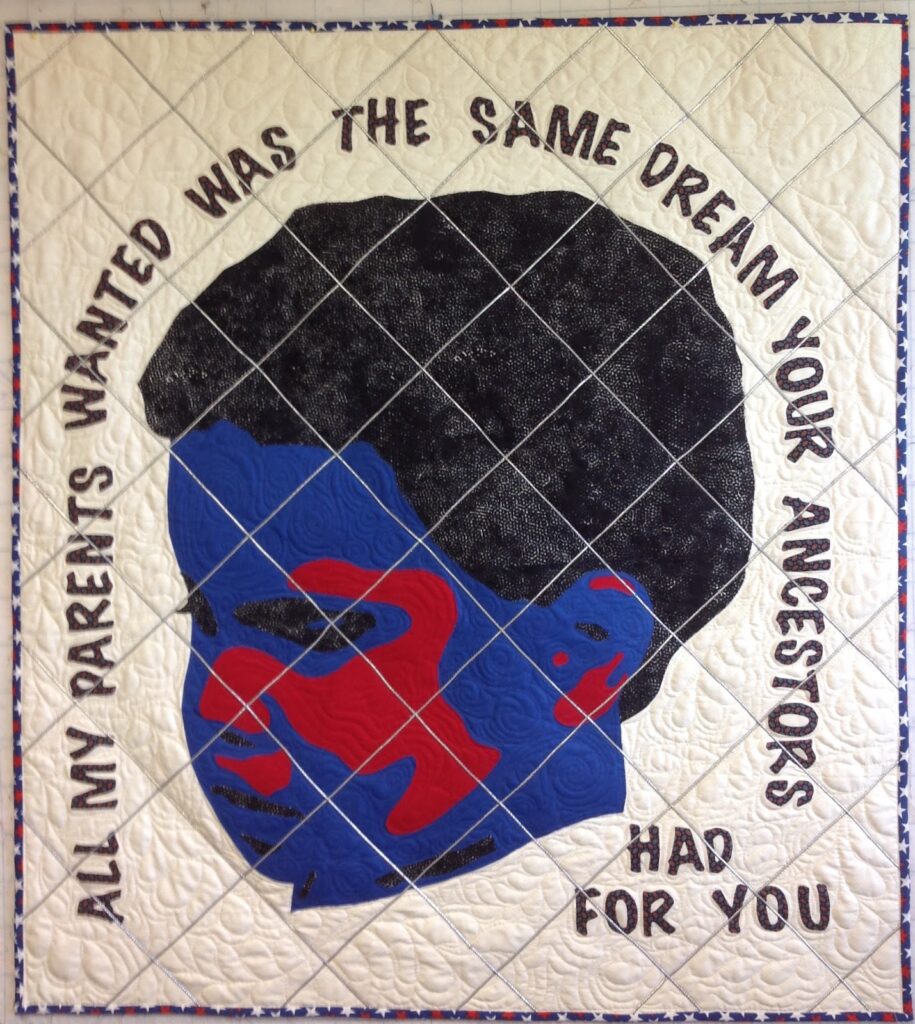
A Message From the Children At the Border by Sylvia Hernandez
I created this quilt after reports of children dying at border facilities. It was heartbreaking to t…

Stolen Youth

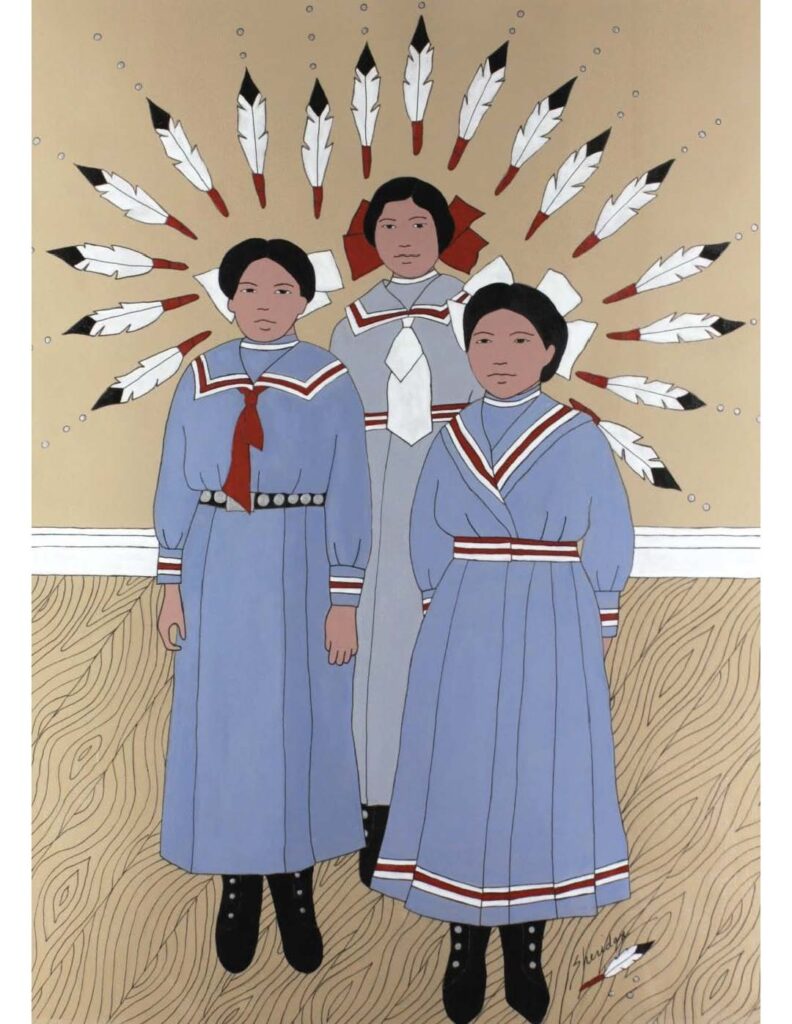
Children have been used as pawns by colonizer-settlers (police, the army, and independent bounty hunters who were not constrained by the law) seizing their land and their children. From slavery to Trump, children have been leveraged by the government as a means to control the parents and grandparents. The artist in this category has a personal connection to this topic.

Carlisle Girls, 2018 by Sheridan MacKnight
Home in the Lakota language is thiyáta, meaning, at home, homeward. I think of my relations, the…

Black Liberation

In the early aughts I was a high school English teacher. Though I do not remember which book, story, or poem we were reading, I do recall students asking why more enslaved people did not rebel. Back then I did not know the answer: Black liberation has been battling oppressive forces since the dawn of African slavery. Different parts of the country experienced revolts, some huge, like John Brown’s raid on Harper’s Ferry, the Slave Revolt in New York in 1712. Enslaved people in the South ran away into swamp lands, where, in some instances, they set up communities, or they escaped into Mexico. In the North, people escaped to Canada. When Frederick Douglass escaped, the Underground Railroad was just being recognized by the world outside of enslaved “fugitives”. Since slavery was ended in 1865, Black Liberation has persisted, through the activism and scholarship of Ida B. Wells, Anna Julia Cooper, Septima Poinsette Clark, Malcolm X, Thurgood Marshall, Fannie Lou Hamer, and the list is eternal. Until there is Black Liberation, there will always be people fighting for it.

Over Our Heads, 2020 by Tasha Douge
To be clear, slavery and immigration are two different systems. Slavery involved the kidnapping, for…

American Hypocrisy

Do you remember when San Francisco 49ers QB Colin Kapernick took a knee to protest violence against Black bodies and then the NFL pushed him out of the franchise? This is an example of American Hypocrisy. The policies of this country do not protect its BIPOC citizens. A country founded on genocide and slavery that continues to silence this truth of its history cannot be just. It is not the dream for most, it is sheer will, fight, and determination for folks who did not grow up with the benefits of having a system on your side. Meritocracy is a myth. The American Dream for many is a nightmare.

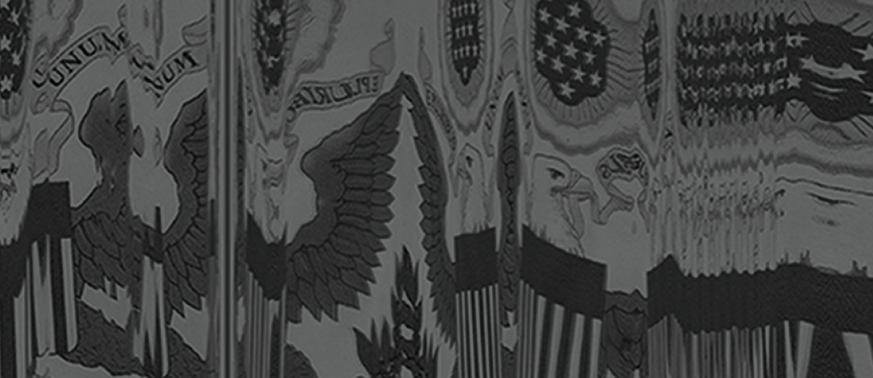
Scrub, 2020 by Peter Hoffmeister
Scrub (Lewis Latimer House) is a site-responsive audio piece that uses The Star-Spangled Banner as i…
Time & Memory Project